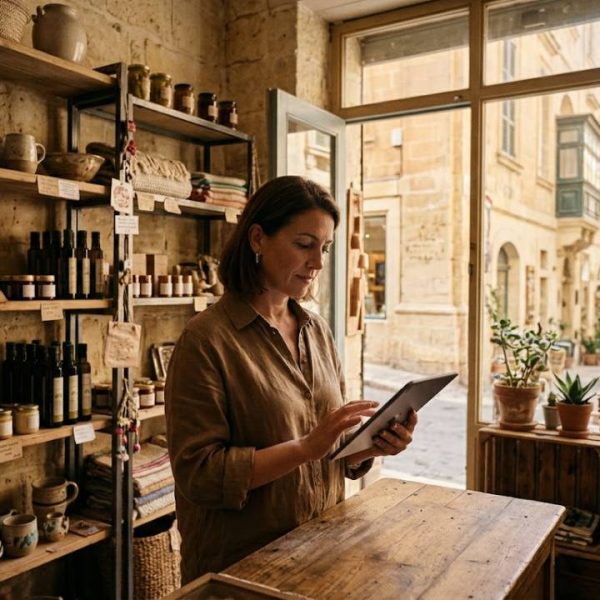
Malta is a small island with a very international customer base. Residents speak Maltese and English, tourists arrive from Italy, Germany, France and the UK, and many companies sell to buyers across Europe. For a local business, a website in one language leaves money on the table.
This article explains how Maltese businesses can run websites in several languages without losing control of quality, cost or deadlines.
Why one language is not enough
English works well for many visitors, but people prefer to buy in their own language. A visitor from Germany who finds a product page in German is more likely to trust the shop. A tourist from Italy who can read opening hours and menus in Italian will book with more confidence.
A site in the visitor’s language answers questions before they are asked. This is true for hotels, restaurants, tour operators, online shops and service companies.
Start with the markets that matter
List where your customers come from. Check your analytics, booking data and sales records. Choose two or three languages with the most demand. Add more only when you can maintain them properly.
A half-translated site is worse than a single-language site. Visitors notice missing pages and outdated prices.
Decide what to translate
You do not need to translate everything at once. Begin with the home page, main product or service pages, contact details, booking or checkout and policies such as returns and cancellations. Add blog posts and extras later.
Keep a list of pages and update it whenever the English version changes. This prevents the common problem of one language showing last season’s prices.
Plan the website structure
Most small businesses use language folders on a single domain, such as /de/ for German. This keeps everything in one place and makes management easier. Add a visible language switch, and do not redirect visitors automatically without giving them a choice.
Make sure each language page has its own title, description and address, so that search engines can show the right version to the right audience.
Manage translations in one system
Copying text into emails and spreadsheets quickly becomes messy. A central system keeps source text, translations, glossaries and reviews together. An online translation management system lets owners and freelancers work in the same place, track which pages are finished and reuse text that has already been translated.
For small businesses, the advantages are simple: fewer mistakes, faster updates and a clear history of what was changed and when.
Shops need extra care
Online shops face special challenges. Product titles, descriptions, sizes, shipping information, taxes and return rules all need to be accurate. A wrong measurement or a missing delivery condition leads directly to refunds and complaints.
The guide on ecommerce localization explains how to adapt product pages, currencies and checkout steps so shoppers abroad feel at home.
Use human review for important content
Machine translation can help with first drafts, especially for large catalogues. Review matters for text that sells or carries legal weight. Ask a native speaker to check headlines, calls to action and terms of service.
Keep a glossary with the names of your products, services and locations. Place names in Malta, such as Mdina or Marsaxlokk, should be written consistently in every language.
Think about local details
Show prices in the currency customers expect, even if payment is made in euros. Use local date formats, phone number formats and units. Mention languages your staff speak so visitors know they can get help.
Include local trust signals such as reviews from visitors in the same country and clear contact details.
Support from local institutions
Maltese companies can find advice, events and funding schemes through national agencies. Malta Enterprise provides information on business support, internationalisation and investment, which can help when you plan to enter new markets.
Combine this with practical steps on your website, so that international interest turns into real customers.
Keep the site up to date
Multilingual sites need regular care. Every time you change a price, a menu or an opening time, update all languages. Set a monthly review date and assign one person to check each language.
Use a simple checklist for changes. This avoids contradictions between versions and saves time later.
Measure results
Track visits, bookings and sales by language. Compare the cost of translation with the revenue it brings. If one language performs well, invest more in it. If another does not, check the quality of the content or the marketing around it.
Collect feedback from customers. They will tell you which words sound strange or which information is missing.
A short checklist
Have you chosen your languages? Is the page list ready? Is there one system for all translations? Are important pages reviewed by native speakers? Is there a schedule for updates?
With these steps, a Maltese business can speak to visitors in their own language and grow beyond the island.